
Embarking on a long-distance road expedition across Northern Thailand is one of the most liberating travel experiences in the world. The transition from bustling urban centers to pristine mountain valleys reveals the true essence of the region. However, a successful journey depends heavily on your mastery of daily operational details. Securing a reliable scooter rental in Chiang Mai is merely the opening step of your adventure; the real work lies in understanding the complex infrastructure, fluid logistics, parking laws, and emergency protocols required to keep your vehicle moving smoothly across provincial boundaries.
Many independent travelers focus entirely on their destinations while completely overlooking the practical mechanics of transit. In Northern Thailand, a simple mistake like misinterpreting a painted curb, running out of fuel on a remote mountain pass, or losing internet access during a critical navigation turn can instantly disrupt your itinerary. This definitive logistical blueprint provides an exhaustive, field-tested guide to fuel management, parking regulations, digital navigation systems, and emergency breakdown protocols to ensure your expedition remains seamless and stress-free.
1. The Fuel Logistics Network: Deciphering Octane and Rural Stations
Fuel management in the mountainous north requires continuous planning and foresight. Fuel consumption drops dramatically when your vehicle’s engine is fighting steep vertical gradients or carrying a heavy payload of luggage and a passenger. To avoid getting stranded in remote areas, you must understand the structure of the local fuel network and know exactly how to identify the right grade of gasoline for your machine.
Commercial Stations vs. Automated Micro-Pumps
In urban centers and along major highways, you will encounter large, modern commercial stations such as PTT, Shell, and Caltex. These stations operate exactly like those in Western countries, featuring digital pumps, convenience stores, and clean restrooms. However, once you enter national park boundaries or deep mountain valleys, these commercial hubs disappear entirely. In their place, rural villages rely on two distinct types of alternative fueling systems:
- Automated Coin/Note Pumps (Tee Yod): These are small, blue or orange automated fuel dispensers located on the roadsides of remote villages. They accept 10, 20, 50, and 100 Thai Baht notes or coins. While the price per liter is slightly higher than at commercial stations, these machines are available 24/7 and provide a vital lifeline during late-night or early-morning mountain transits.
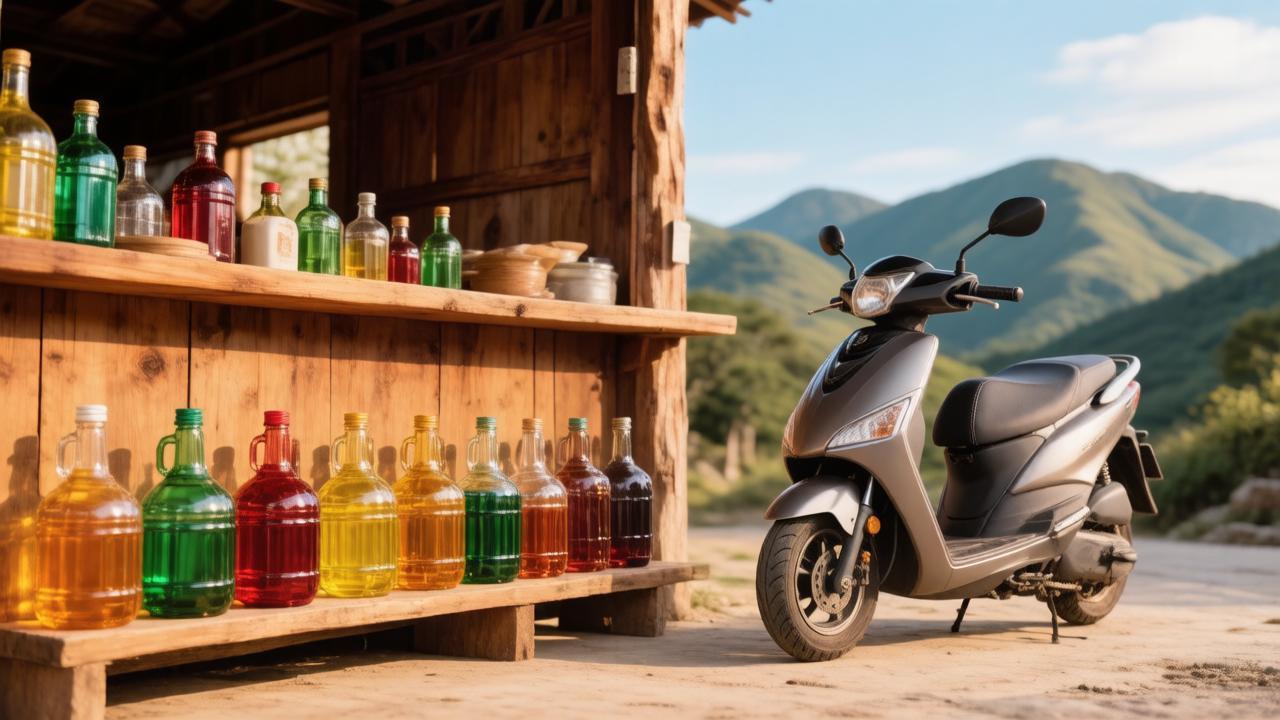
- The Glass Bottle System: Outside rural wooden homes or grocery shacks, you will frequently see racks of recycled glass whiskey or soda bottles filled with a colorful liquid. This is genuine fuel sold by local families. An orange tint typically indicates 91 Octane, while a green tint indicates 95 Octane. To use them, simply pull over, point to your fuel tank, and the owner will use a plastic funnel to pour the contents directly into your bike.
Selecting the Correct Octane Grade
When you pick up your vehicle, always ask the shop technician which fuel type the engine requires. In Thailand, the two standard choices are Gasohol 91 and Gasohol 95 (E10 blends of ethanol and gasoline). While almost all modern fuel-injected engines run perfectly fine on Gasohol 95, using the wrong fuel in an older or specialized machine can cause poor engine performance or temporary stalling on steep climbs. Always check the fuel sticker located directly beneath your seat flap before filling up.
2. Deciphering Parking Law: Curbside Markings and Towing Risks
Finding a place to park a two-wheeler in the city center appears deceptively simple because hundreds of bikes line the streets. However, local traffic police strictly enforce parking regulations, and parking in an illegal zone will result in your front wheel being secured with a heavy chain and padlock. To keep your vehicle safe, you must memorize the legal definitions of the painted curb markings used throughout Thailand:
Red and White Stripes: This indicates an absolute parking prohibition. This marking is applied near busy intersections, major temple gates, pedestrian crosswalks, and sharp corners. Parking here will result in an immediate fine, vehicle clamping, or your scooter being lifted onto a police truck.
Yellow and White Stripes: This denotes a temporary loading zone. You may pull over briefly to check your digital map or let a passenger dismount, but you cannot leave the vehicle unattended. Parking here for extended periods is highly illegal.
White Diagonal Lines on the Asphalt: These zones are designated specifically for two-wheeled parking. Ensure your front wheel faces the curb at a sharp angle and that your bike stays neatly within the painted boundaries to avoid blocking pedestrian foot traffic on the adjacent sidewalks.
Additionally, pay close attention to local “Even and Odd Date” parking signs. On many major commercial streets, parking is permitted strictly on the left side of the road on even-numbered calendar days, and switches entirely to the right side of the road on odd-numbered days. Look for the circular white signs with red borders containing blue arrows and Thai text before leaving your vehicle for the day.
3. Digital Navigation and Signal Loss Mitigation
Modern satellite navigation applications have completely transformed independent travel, but relying blindly on a live cellular connection in deep mountain terrain is a major logistical mistake. Deep valleys and high-altitude national parks frequently experience total signal blackouts, causing your map application to freeze or display incorrect routing data.
To prevent navigation failures, implement a strict offline protocol before starting your journey. Download the entire geographical map of Northern Thailand directly to your smartphone’s internal storage within Google Maps or Maps.me. This allows your phone’s internal GPS chip to track your coordinates smoothly on the map even when you have zero mobile data or cell service. Furthermore, invest in a high-quality, vibration-dampening mechanical phone mount that clamps directly onto your bike’s handlebars, ensuring your screen stays fully visible without taking your eyes off the road curves.
Emergency Breakdown Protocol: Handling Mechanical Failures Safely
If your engine experiences a sudden mechanical failure, or if you strike a sharp nail that causes an immediate rear-tire puncture while traveling a remote route, follow this safety protocol:
- Coast to a Safe Clearance Zone: Instantly activate your left turn signal, guide your decelerating bike completely off the main driving lane, and park on a flat, wide section of the road shoulder well clear of passing traffic.
- Contact Your Rental Agency First: Open your rental contract contract and call the official emergency number listed on the paper. Reputable agencies maintain extensive networks of partner mechanics across the province and will dispatch a rescue truck or direct you to the nearest authorized repair shop.
- Locate a Local Repair Shop (Raan Som Rot): If you are completely outside cell service limits, look for a small roadside shack displaying a collection of old tires stacked outside or a large air compressor sitting on the porch. These are local motorcycle repair shops. Thai mechanics are incredibly resourceful and can patch a flat tire or replace a broken drive belt within minutes for a very modest fee. Always keep a physical receipt of the repair to present to your rental agency upon return.