
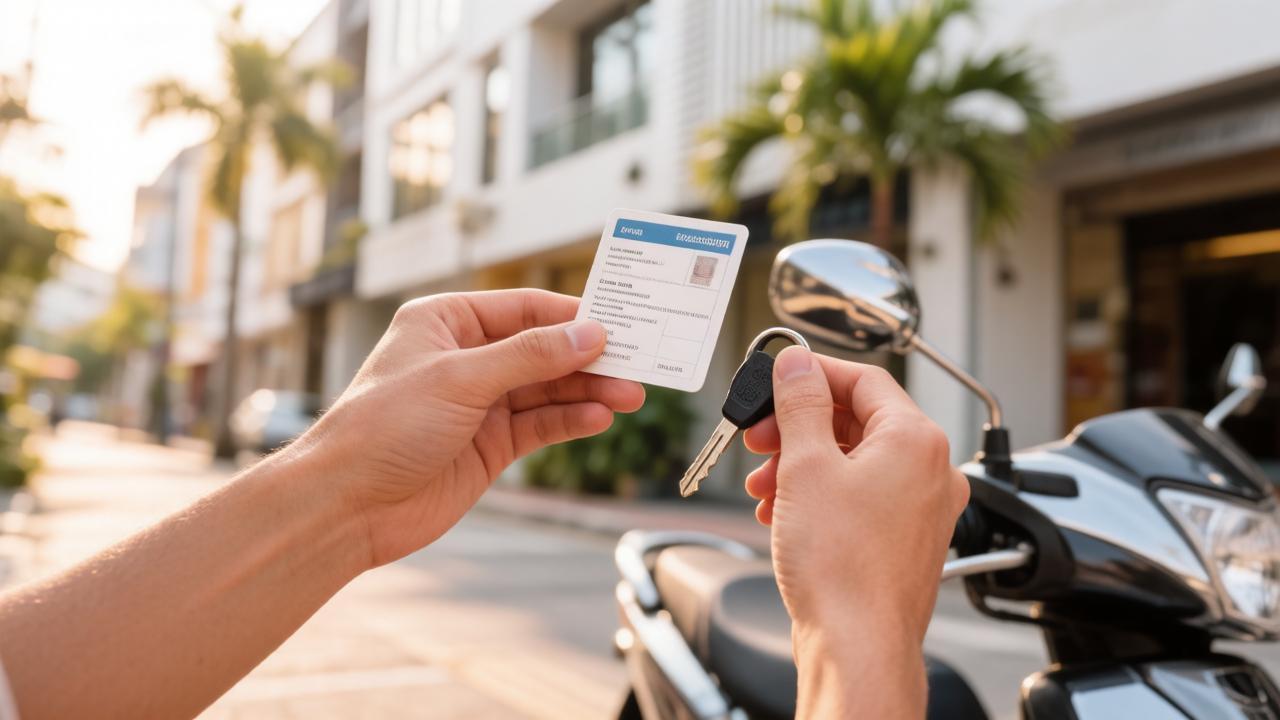
For hundreds of thousands of international travelers arriving in Northern Thailand each year, securing a independent two-wheeled vehicle is the absolute highlight of their journey. However, beneath the romantic allure of cruising into the sunset lies a complex landscape of local laws, financial liabilities, and contractual obligations. Arranging a scooter rental in Chiang Mai is a formal legal transaction that takes place in a foreign country, often operating under fundamentally different regulations than what you might be accustomed to at home.
Failing to read the fine print, misunderstanding insurance limitations, or being unprepared for the ubiquitous local traffic police checkpoints can transform an idyllic vacation into an incredibly stressful, expensive ordeal. This exhaustive legal and financial blueprint is designed to strip away the ambiguity, providing you with concrete facts, actionable strategies, and insider knowledge to protect both your physical safety and your wallet while navigating the local rental market.
Deconstructing the Rental Agreement: Hidden Clauses and Liabilities
When you sit down at a desk in a rental agency, you will be presented with a standard rental contract. While it may look like a simple formality, this document is a legally binding contract enforceable under Thai civil law. Many travelers sign it blindly, unaware of the specific liabilities they are accepting. Before putting ink to paper, you must carefully read and verify several critical parameters within the text.
First and foremost, inspect the clause regarding vehicle damage valuation. In many standard contracts, the renter agrees to pay the full retail cost of replacing the vehicle if it is stolen or completely totaled, alongside a daily “loss of income” fee for every day the bike is in the repair shop. Ensure the contract clearly outlines how damage costs are calculated and that it does not grant the shop arbitrary power to invent repair prices. Reputable shops will use official parts catalogs from manufacturer service centers (like Honda or Yamaha) to calculate genuine repair fees.
The Truth About Insurance: What is Covered and What is Not?
Insurance in the Thai rental industry is one of the most misunderstood topics among tourists. There is a massive difference between what local shops call “insurance” and what actually protects you from catastrophic financial ruin. Let’s break down the reality of coverage options available on the ground through a series of direct legal clarifications:
What is the mandatory Government Insurance (Por Ror Bor)?
Every legally registered scooter in Thailand must carry a basic third-party medical insurance disc, commonly known as Por Ror Bor. This insurance is incredibly limited. It only covers basic, emergency medical expenses for third parties injured in an accident involving the vehicle, capped at a very low financial threshold. It provides absolutely zero financial coverage for damage to the rental scooter itself, and zero coverage for your own personal injuries if you are found at fault.
Does the rental shop’s optional “Damage Cover” actually protect me?
Many premium rental agencies offer an optional daily damage waiver fee (typically costing between 50 to 150 THB extra per day). It is vital to understand that this is almost never a true comprehensive insurance policy from an international underwriting company. Instead, it is an in-house agreement with the shop. It usually covers minor cosmetic scratches and dents up to a certain financial limit (e.g., up to 5,000 THB), but it completely excludes major structural frame damage, total engine failure, or vehicle theft. Always ask for a written list of exclusions before paying for this extra protection.
Will my international travel insurance policy cover a scooter accident?
This is the most critical question of all. The vast majority of standard international travel insurance policies will instantly deny medical or liability claims resulting from a two-wheeled vehicle accident unless you meet two very strict, non-negotiable criteria. First, you must possess a valid motorcycle driver’s license in your home country that matches the engine displacement of the rental bike. Second, you must hold a valid International Driving Permit (IDP) with the motorcycle stamp endorsed. If you are riding with only a standard car license, your international insurance is completely void.
Surviving the Checkpoints: A Step-by-Step Guide to Interacting with Traffic Police
The Chiang Mai Traffic Police operate highly organized, completely legal checkpoints across the city on a daily basis. Common locations include the intersections near Chang Phueak Gate, Tha Phae Gate, Nimmanheimin Road, and the base of the superhighway entry points. Their primary objective is to enforce traffic safety laws and collect revenue from non-compliant riders. If you see a row of orange cones and officers directing traffic ahead, do not panic, do not attempt to execute a dangerous U-turn, and follow this exact protocol:
- Pull Over Calmly and Turn Off the Ignition: Signal safely, guide your scooter to the side of the road as directed by the officer, and immediately turn off your engine. Removing the keys and placing them in your pocket prevents any potential misunderstandings.
- Present Your Legal Documents Immediately: Hand over your physical International Driving Permit (IDP) showing the motorcycle endorsement, alongside a clear photocopy or digital smartphone photo of your passport photo page and current Thai visa stamp. If your paperwork is fully compliant, the officer will wave you through within 30 seconds without issue.
- Accept the Fine Graciouly if Non-Compliant: If you are caught riding without an IDP, or without a helmet, you have broken local law. The officer will issue you a physical, written traffic citation ticket. The standard fine for riding without a proper license typically ranges between 500 to 1,000 THB.
- Understand the Legitimate Official Payment Process: Once a formal ticket is written, you are legally required to pay the fine. You can either take the ticket directly to the main Traffic Police Station located near the Ping River to pay cash and receive an official receipt, or in some instances, pay the fine on the spot directly to the officer if they are operating an authorized mobile payment desk at the checkpoint. Always insist on receiving a physical, stamped receipt. This receipt acts as a temporary driving permit, preventing you from being fined again for the same infraction for the next 24 to 48 hours.