
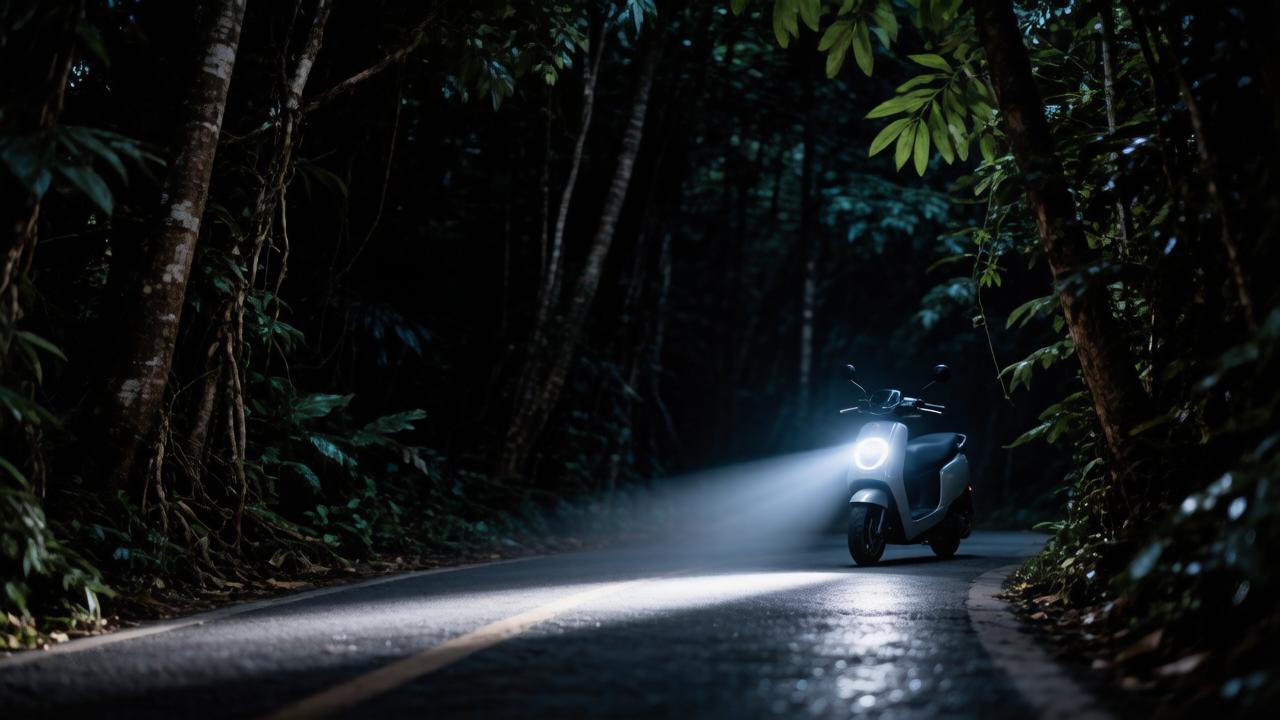
The transition from day to night in Northern Thailand happens with incredible speed. In the tropics, twilight is brief, and a brilliant golden sunset can dissolve into pitch-black darkness within less than thirty minutes. For travelers navigating the rural highways or twisting mountain valleys surrounding the city, this rapid change introduces severe driving challenges. While securing a reliable scooter rental in Chiang Mai grants you unparalleled mobility during the day, operating that same vehicle after dark demands an entirely different tactical approach and a heightened level of situational awareness.
Urban centers like Nimmanheimin or the Old City are brightly lit by streetlights, neon shop signs, and commercial displays, making night riding feel deceptively safe and simple. However, the moment you venture onto the outer ring roads, rural highways, or high-elevation mountain passes, illumination drops to zero. Combine this lack of light with unexpected wildlife crossings, unmapped road construction, and fatigued long-haul drivers, and night riding quickly becomes the most hazardous activity a traveler can undertake. This technical guide delivers an exhaustive look into low-visibility driving strategies, optical management, and defensive positioning protocols.
The Visibility Timeline: Managing Changing Light Conditions
Understanding how human vision adapts to changing light levels allows you to plan your travel timeline effectively and avoid being caught in high-risk scenarios without adequate preparation:
17:30 – 18:15: The Golden Hour Deceleration
The sun dips low, creating dramatic, long shadows across mountain switchbacks. While visually stunning for photography, this intense lateral glare can completely blind you when turning directly into the sun. Lower your visor, reduce your baseline speed by 20%, and watch for oncoming vehicles crossing lanes due to temporary sun-blindness.
18:15 – 18:45: The Critical Twilight Transition
This is the most dangerous optical window of the day. Human eyes require roughly 20 to 30 minutes to adjust from bright daylight vision to night vision. During this middle ground, objects lose their contrast, and unlit hazards—such as potholes, pedestrians in dark clothing, or broken-down agricultural trucks—become nearly invisible. If you are still in the mountains, pull over safely, clean your helmet visor, and prepare your mindset for night operations.
18:45 Onward: Complete Nocturnal Mode
Total reliance on your scooter’s mechanical headlamp system begins. Streetlights disappear on rural roads. Your world shrinks to the 20 to 30-meter beam of light projected ahead of your front wheel. Speed must be regulated strictly by how far your headlight illuminates the road surface.
Tactical Scenario Analysis: Overcoming Common Nocturnal Hazards
Riding defensively at night means predicting hazards before they enter your field of vision. Below are specific, real-world tactical scenarios you must be prepared to handle when operating on rural routes after dark:
Scenario A: The Blinding Oncoming High-Beam Glare
The Threat: On rural highways, large pickup trucks and intercity tour buses frequently drive with their high-beams completely locked on, destroying your night vision and creating temporary blindness as they approach.
The Tactical Response: Never stare directly into the approaching headlights of the oncoming vehicle. Instead, intentionally shift your visual focus downward and slightly to the left side of your lane. Use the white painted fog line on the left edge of the asphalt as your visual anchor to maintain a straight, stable path. Slow down significantly to expand your reaction time until the vehicle passes.
Scenario B: The Unlit “Phantom” Agricultural Vehicle
The Threat: Local farmers frequently transport sugarcane or wood products using ancient, slow-moving tractors, trailers, or modified pickup trucks that possess completely broken or missing tail lights.
The Tactical Response: Practice the rule of “Never Outdrive Your Headlights.” If you are traveling at 60 km/h, your total stopping distance exceeds 35 meters. If your headlight only illuminates 25 meters ahead, you will strike a stationary or slow-moving unlit vehicle before your fingers can even squeeze the brake levers. Maintain a modest urban speed and look for sudden interruptions in the ambient shadows ahead.
Scenario C: High-Altitude Animal Crossings
The Threat: As the heat of the day dissipates, domestic dogs, water buffaloes, and wild animals migrate onto the asphalt because the road surface retains thermal heat from the sun, making it a warm resting place.
The Tactical Response: Mountain descents through national parks require extreme vigilance for wildlife. Dogs can freeze in your headlight beam or dart unpredictably. Scan the margins and shoulders of the road continuously. If you spot reflections from animal eyes up ahead, ease off the throttle completely, flash your high-beams, and prepare to execute an emergency stop.
Optical Management: Visor Choices and Headlamp Maintenance
Your ability to react to a road hazard is directly bounded by your ability to see it. Many long-distance riders compromise their safety by using incorrect optical equipment. Ensure you follow these two strict mechanical protocols for night operations:
- The Transparent Visor Mandate: Tinted, mirrored, or smoked helmet visors are fantastic for blocking the intense tropical sun during the day. However, using a tinted visor at night reduces light transmission by over 70%, making night riding borderline suicidal. If your multi-day journey involves after-dark travel, you must pack a secondary, completely clear transparent visor under your seat, or wear clear protective glasses with your visor raised up.
- Headlight Alignment and Assessment: When picking up your vehicle from the agency, test the headlight functions in a dark section of the shop. Verify that both the low-beam and high-beam filaments are fully functional. A broken high-beam completely strips your ability to scan ahead on dark mountain roads. Ensure the plastic headlamp housing is clean and free of heavy oxidation or mud that could diffuse the light beam.